
Women in Manufacturing: Why Safety Equipment Still Defaults to a Male Fit
A workplace can hit every diversity target on its scorecard and still send women onto the floor in gear designed for someone else’s body. Government and industry attention to women in manufacturing has focused on getting more women into the sector: apprenticeships, mentoring and leadership pathways dominate the public conversation. Less attention is paid to whether the industry is equipped to support the workforce it says it wants to build.
This piece covers what the participation data show, why standard-issue safety equipment is a hidden barrier, and what safety managers can practically check on-site.
The participation picture
Women remain a small share of the manufacturing trades workforce, and the published strategies aimed at changing that are consistent in their diagnosis. The Department of Employment and Workplace Relations’ Building Women’s Careers Program notes that women represent less than 8 per cent of apprentices in male-dominated trades, a figure drawn from its Together We RISE initiative targeting advanced manufacturing, clean energy and construction.
Victoria has responded with its own strategy. The state government’s ‘Making it Equal’ plan sets out how it intends to attract and retain more women in manufacturing by removing structural barriers and supporting employers in driving gender equality. Queensland has run a parallel programme through its own Women in Manufacturing Strategy, again built around mentoring and toolkits for attraction and retention.
Each of these strategies focuses on getting women in the door and keeping them in leadership roles, and that focus is well justified given the scale of the participation gap. What none of them addresses directly is equipment fit, a retention issue that sits in plain sight on the factory floor rather than in a policy document.
Why standard-issue safety equipment is a fit problem: not a comfort problem
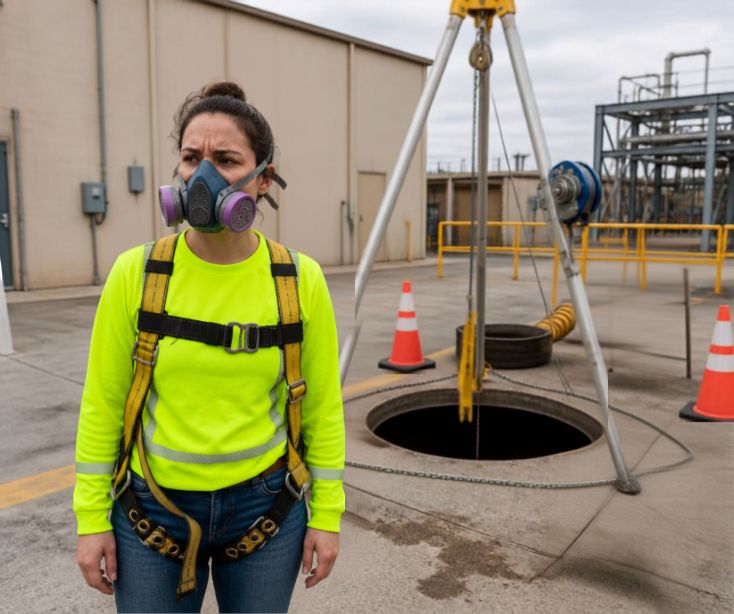
Respiratory protection depends on a seal against the face, and sizing ranges developed against male facial dimension data can leave a proportion of women without a reliable seal. That is a respiratory protection failure, not an inconvenience.
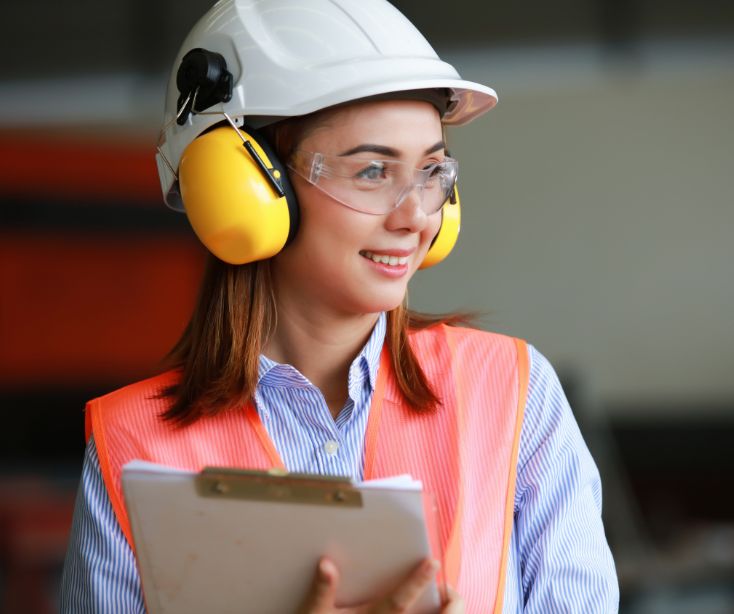
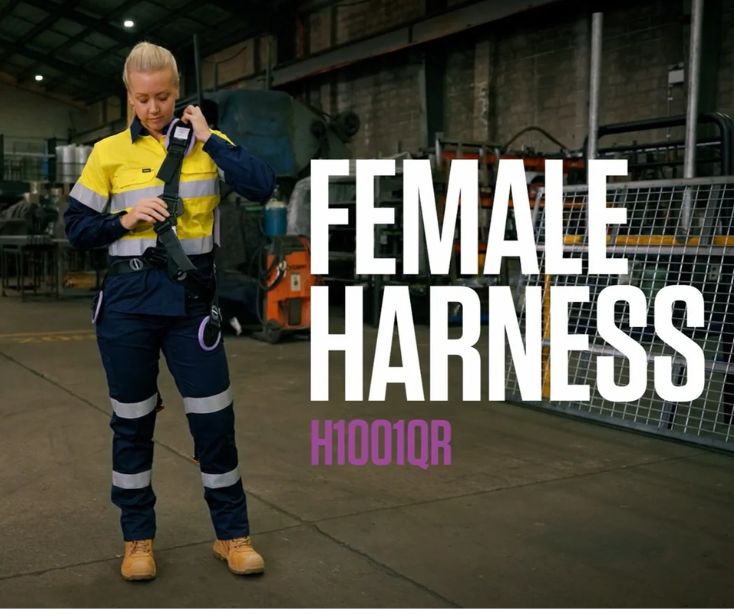
Fall-arrest and height-safety harnesses pose the same risk in a different form. A harness that does not fit properly on a smaller or differently proportioned frame can shift under load, changing how force is distributed through the body during a fall. Hand protection follows the same logic: oversized gloves reduce grip and dexterity, increasing the risk of the exact hand injuries gloves exist to prevent. Ill-fitting hi-vis and workwear (excess fabric, incorrect proportions) can snag on machinery or obscure the wearer’s visibility.
Seal integrity, load distribution, dexterity, and snag risk are defensible, evergreen reasons that fit is a safety question, and they hold regardless of which brand or range a site currently stocks.
What safety managers can actually check
Start by asking whether on-site PPE sizing ranges and fit-testing protocols cover the full range of body types actually working there, rather than just the range the standard-issue catalogue ships in. Respirator fit-testing should be an individual, per-wearer check, consistent with the intent of AS/NZS 1715 respiratory protection guidance, rather than a one-size assumption applied across a crew.
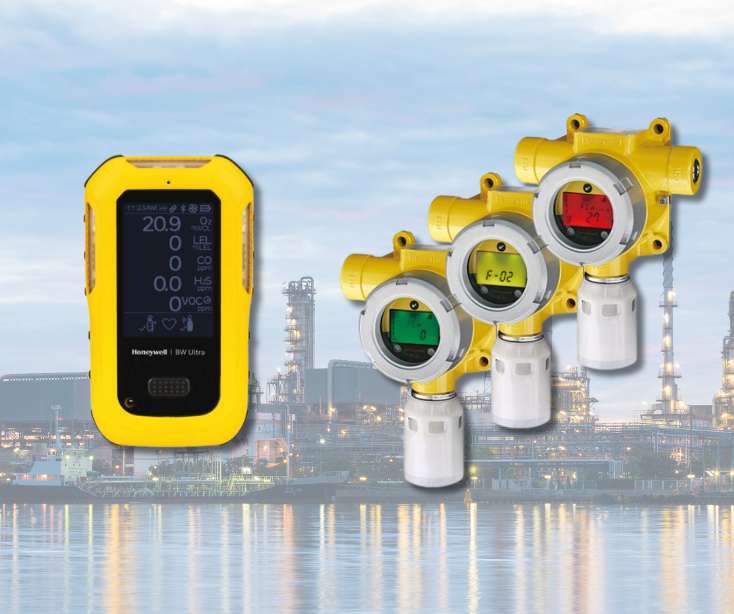
Equipment review is worth building into onboarding for any new demographic entering a role, rather than being applied once at procurement and left unrevisited. For Aegis, as a safety equipment supplier, raising the fit conversation directly with clients during procurement and re-supply cycles is a natural extension of the existing calibration and servicing relationship, rather than a new product pitch. Our confined space equipment and height safety ranges are the two categories where fit has the most direct bearing on how a fall or gas event plays out.
FAQ
Is ill-fitting PPE actually a safety issue or just a comfort issue? Both, but the safety dimension is the one that matters for compliance. A respirator that does not seal, a harness that shifts under load, or gloves that reduce grip are equipment failures with a direct safety consequence, regardless of how the wearer feels about comfort.
Are Australian manufacturers required to provide PPE that fits women specifically? General work health and safety duties require PPE that is suitable for the wearer and the task. In practice, that fit-for-purpose requirement means sizing and fit testing need to account for the actual workforce on site, rather than relying on a default range.
Where can I find current data on women’s participation in Australian manufacturing? The federal Building Women’s Careers Program and state strategies such as Victoria’s ‘Making it Equal’ and Queensland’s Women in Manufacturing Strategy publish participation figures and programme details.
Conclusion
Getting more women into manufacturing and keeping them there are two different problems. The first is a recruitment and culture question the industry has worked on for years through mentoring, apprenticeships and leadership pathways. The second is a supply chain and procurement question that starts with what is actually in the PPE cabinet.
If your PPE sizing range has not been reviewed since your workforce changed, it is worth a conversation, and it costs nothing to check against what your crew is wearing today. Talk to Aegis about a fit and sizing review as part of your next safety equipment service cycle, or visit our newsroom for more from Aegis on workplace safety practice.