
Navigating Australian Workplace Safety Laws 2026: The Aegis Expert Guide
Australia’s work health and safety framework has shifted more in the past two years than at any point since the original Model WHS Act was published. Persons Conducting a Business or Undertaking (PCBUs) now face a regulatory environment that treats psychological harm with the same seriousness as physical injury, prepares for a major change in airborne contaminant rules on 1 December 2026 and carries industrial manslaughter penalties measured in tens of millions of dollars.
For operators across oil and gas, mining, council and government, utilities, education and construction, the question is no longer whether to act. What matters now is whether the systems, training and equipment in place today would withstand a regulator’s scrutiny tomorrow. Aegis Sales & Service has supported Queensland and national clients with gas detection, height safety, breathing apparatus and instrumentation calibration since 1984. The guide below distils the federal model, jurisdictional differences and the three legislative changes most likely to affect your obligations through 2026.
1. The State of Safety in 2026
The current regulatory posture rewards proactive risk management, not paperwork. Safe Work Australia’s policy direction, mirrored in state amendments, asks PCBUs to identify hazards before they cause harm and to demonstrate that controls are in place, are monitored, and are effective. Compliance checklists alone are no longer a defensible position when a serious incident is investigated.
Two forces are pushing the change. Regulators have accumulated enough data on long-tail injuries (psychological harm, respirable crystalline silica exposure, fall-arrest failures) to act, and courts have signalled that the ‘reasonably practicable’ test now includes whether modern monitoring, calibration and inspection technology was used. Aegis Sales & Service has supported major upstream and midstream gas operators, government departments, councils, universities and Tier-1 retailers across Queensland and the eastern seaboard. Across those engagements, the businesses moving early on the 2026 changes are the ones already treating safety as a procurement and engineering discipline, not an HR formality.
2. The Federal Framework: Safe Work Australia and the Model Laws
Safe Work Australia (SWA) is a national policy body, not a regulator. It develops the Model WHS Act, the Model WHS Regulations and the supporting Codes of Practice that states and territories then adopt, adapt or replace. SWA has no power to enforce, prosecute or issue improvement notices; that authority sits with each jurisdiction’s regulator. You can read SWA’s current materials at safeworkaustralia.gov.au.
The harmonisation project, in motion since 2011, has produced a largely consistent legal baseline across Queensland, New South Wales, South Australia, Tasmania, the Northern Territory, the Australian Capital Territory and the Commonwealth. PCBUs operating across borders benefit from common definitions, a common duty of care and a common ‘reasonably practicable’ test. Two jurisdictions, Victoria and Western Australia, have their own legislation; their obligations are similar in spirit but differ in detail.
For Commonwealth-jurisdiction employers (Australia Post, Defence civilian workforces, ACT Government and licensed self-insurers), Comcare is the regulator. Comcare also administers the Safety, Rehabilitation and Compensation Act, which interacts with the WHS Act in incident investigations. National operators with mixed workforces should map every site and contracting arrangement to the relevant regulator before relying on a single compliance template.
3. State-by-State Regulatory Breakdown
The harmonised states share most of the legal text, but enforcement priorities and codes of practice can differ. The table below summarises which body to contact, harmonisation status and one current focus area worth tracking.
|
State / Territory |
Regulator |
Status |
Key 2026 Update |
|
Queensland |
Workplace Health & Safety Queensland |
Harmonised |
Engineered stone ban embedded; psychosocial code in force |
|
New South Wales |
SafeWork NSW |
Harmonised |
Sexual and gender-based harassment code finalised |
|
South Australia |
VSafeWork SA |
Harmonised |
Industrial manslaughter offence active |
|
Tasmania |
WorkSafe Tasmania |
Harmonised |
Aligned silica controls |
| Northern Territory | NT WorkSafe | Harmonised | Mirrors Model Act amendments |
| ACT | WorkSafe ACT | Harmonised | Psychosocial regulation enforced |
| Commonweatlh | Comcare | Harmonised | Mental health prevention focus |
| Victoria | WorkSafe Victoria | Non-Harmonised | OHS Act 2004 retained; new psychological-health regulations progressing |
| Western Australia | WorkSafe WA | Partial | WHS Act 2020 in force; mining administered by DEMIRS |
Two jurisdictions deserve special attention. Victoria operates under the Occupational Health and Safety Act 2004, with WorkSafe Victoria overseeing duties that look similar to the Model Act on the surface but differ in defences available, notification thresholds and penalty structures. Western Australia adopted a WHS Act in 2020 that aligns more closely with the model framework, but mining safety still sits with a separate department, the Department of Energy, Mines, Industry Regulation and Safety.
For Queensland operators, the primary point of contact is Workplace Health and Safety Queensland. Aegis Sales & Service is headquartered at 1/119 Delta Street, Geebung QLD 4034, with a second showroom at 21 Chinchilla Street, Chinchilla, putting our team within reach of metropolitan, Surat Basin and Western Downs operations. Cross-jurisdictional clients commonly ask us to align their gas detection calibration cycles and height safety inspections with the strictest applicable rule, rather than maintaining different schedules per state, which is usually the simpler path to defensible compliance.
4. Critical Legislative Updates for 2026
Three regulatory shifts will define WHS conversations across most boardrooms and crew rooms this year. Each connects directly to the equipment, training and verification activity that PCBUs need to evidence.
Psychosocial Hazards
The harmonised states have adopted regulations and codes of practice requiring PCBUs to identify, assess and control psychosocial hazards (job demands, role conflict, exposure to traumatic events, harassment, bullying) with the same rigour as physical hazards. Victoria is advancing its own mental health regulations on a similar trajectory. In practice, consultation processes, workload reviews, anti-bullying procedures, and incident reporting now sit within the WHS evidence base, not the HR file, and the hierarchy of controls applies to mental health risks just as it does to mechanical or chemical ones.
Workplace Exposure Limits (WEL)
On 1 December 2026, the Workplace Exposure Standards for airborne contaminants are replaced by the new Workplace Exposure Limits, with around 700 substances reviewed and many limits reduced. Respirable crystalline silica, welding fume, diesel particulate, isocyanates and a list of solvents all see tighter ceilings.
For PCBUs, the consequence runs from procurement to monitoring. Air monitoring programs designed against the older Standards may no longer demonstrate compliance. Fixed and portable gas detection instruments need calibration certificates that map to the new limit values, and dust monitors deployed on construction, tunnelling, mining and stonemasonry sites need configuration and alarm thresholds reviewed before the transition date.
Industrial Manslaughter and Penalties
Industrial manslaughter offences are now active in most Australian jurisdictions, with body corporate penalties running up to around $15 million in several states (Queensland and Victoria sit at the higher end) and custodial sentences for individuals reaching 20 to 25 years depending on the legislation that applies. Specific maxima vary by jurisdiction; PCBUs operating across borders should source the applicable figure for each state in which they hold a workplace. Maintenance logs, calibration certificates, inspection reports, training records and incident-response evidence become the artefacts that distinguish a reasonable PCBU from a negligent one when a court tests the ‘reasonably practicable’ standard.
5. Technical Compliance: The Aegis Advantage
Legislation sets the duty; physical evidence proves it.
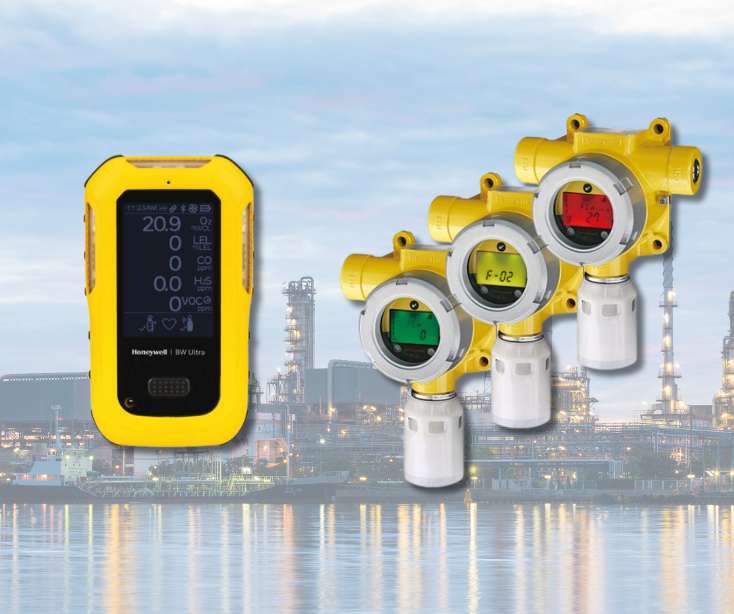
The wider gas detection and instrumentation servicing programs are supported separately as a Honeywell Tier 1 Platinum Partner and through the manufacturer-trained technician network. Our team carries out height safety inspections in accordance with AS/NZS 1891.4:2009 and supports clients with portable and fixed gas detection, breathing apparatus, lone-worker monitoring, breathalysers, instrumentation, and electrical safety equipment.
Inspection of fall-arrest harnesses, lanyards and lifelines under AS/NZS 1891.4:2009 produces the documentary trail a regulator expects after a height incident. Configuring gas detectors against the new Workplace Exposure Limits, before December 2026, shows the proactive verification stance that the ‘reasonably practicable’ test now demands.
The principle is simple enough that crews repeat it themselves: safety gear is only as good as its last service. PCBUs who treat calibration, inspection and training as recurring engineering activities (not annual cost lines) are the ones whose records hold up when something goes wrong.
Conclusion: Looking Ahead
The 2026 regulatory shifts reward operators who already think of safety as a continuous discipline. Psychosocial obligations, the WEL transition on 1 December 2026 and active industrial manslaughter penalties together mean that documentation, calibrated equipment and competent inspection are no longer optional ingredients of a compliant program; they are the program.
If you would value an external review of your technical safety equipment, calibration cycles and legislative alignment, contact Aegis Sales & Service on 07 3865 1139 or visit information on our services. The work combines equipment supply, technical expertise and ongoing education in a single engagement.