
Portable vs Fixed Gas Detectors: Which Does Your Business Need?
Workplace gas exposure does not announce itself. A refrigerant leak in a high-rise plant room, a build-up of carbon monoxide in a basement carpark, a pocket of hydrogen sulphide on a wellhead pad: every one of these is invisible, often odourless and capable of putting workers down before they realise something is wrong. Queensland businesses operating under the Work Health and Safety Act 2011 have a duty to identify hazards and implement a monitoring regime that catches them early.
The question we hear most often from procurement managers, safety leads and plant engineers is straightforward. Do we need portable gas detectors, a fixed gas detection system, or both? The honest answer is that the choice depends on three things: the site's hazard profile, how people move through the work, and the compliance posture the business wants to maintain. This article walks through what each detection model actually does, when each is the right call and how Aegis Sales & Service supports both ends of the range from its Geebung head office and Chinchilla showroom.
1. Two Detection Models, One Goal
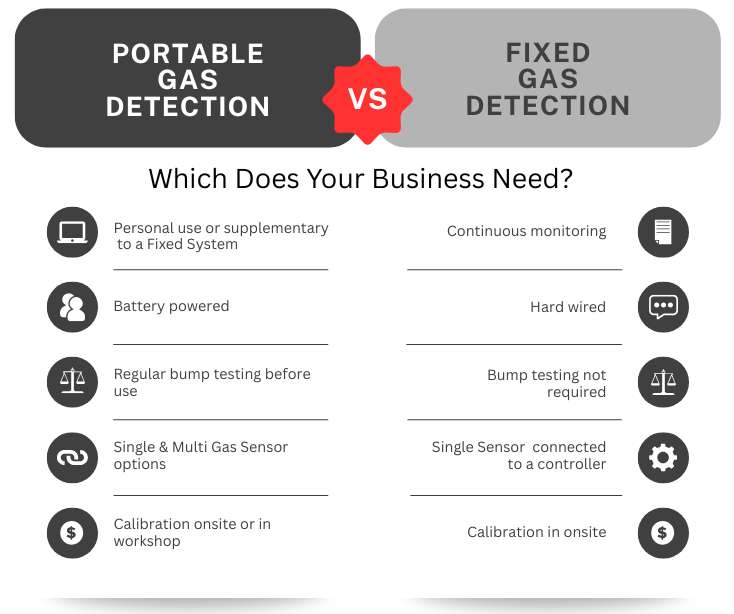
Portable and fixed gas detectors are not competing technologies. They are two halves of the same safety mission, deployed against different risk patterns. A fixed system continuously monitors a known hazard zone, twenty-four hours a day, with sensors mounted in calibrated positions. A portable detector travels with the worker, monitoring the air immediately around the person carrying it. Both rely on the same underlying sensor chemistry, require scheduled calibration, and are subject to the same legal obligation under Safe Work Australia’s WHS framework.
Most industrial sites end up running both. A refrigerant plant room will have a fixed monitoring head wired into the building services. The technician who walks in to service it will also be wearing a personal multi-gas monitor on their lapel. The fixed system protects the asset around the clock; the portable confirms the air the worker is breathing right now. Treating them as a pair, rather than as alternatives, is the practical starting point for any business writing a gas detection plan.
2. What Are Fixed Gas Detection Systems?
A fixed gas detection system is a permanently installed network of sensor heads, controllers, and alarm devices that continuously monitors a defined area. Sensor heads sit in calibrated positions chosen relative to the gas being monitored: heavier-than-air gases are picked up low, lighter gases high, and airflow patterns are factored into the layout. Each head reports back to a central controller, which drives audible and visual alarms, sends signals to the building management system, and can trigger automatic ventilation, plant shutdowns, or fire-system handshakes when concentrations exceed set thresholds.
Typical applications in Queensland include refrigerant monitoring in the plant rooms of high-rise buildings (R134A and other modern refrigerants), carbon monoxide and nitrogen dioxide monitoring in commercial carparks, hydrogen sulphide monitoring on wastewater and gas pipeline assets, and boundary monitoring around industrial processing sites. The Sauermann range covers refrigerant and indoor air-quality applications; Honeywell fixed sensors handle the broader industrial process side. Each installation is engineered for the specific gas, the room geometry and the regulatory driver behind the project.
Aegis Sales & Service installs and maintains fixed systems on-site under its ISO/IEC 17025-accredited Metrology Laboratory scope, which means the calibration traceability the laboratory holds also follows the technician out the door. That includes commissioning checks, scheduled service visits, sensor swaps when life-cycle limits are hit and the documentation needed to satisfy WorkSafe Queensland and asset auditors that the system is reading true.
3. What Are Portable Gas Detectors?
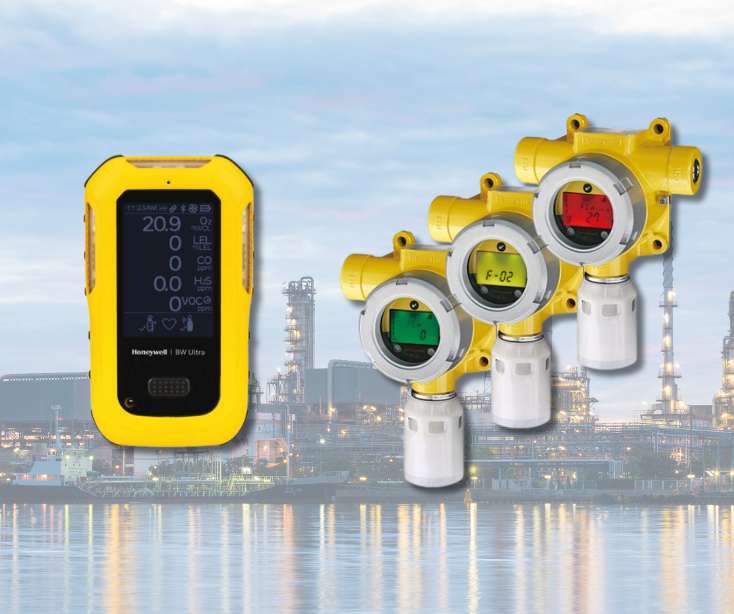
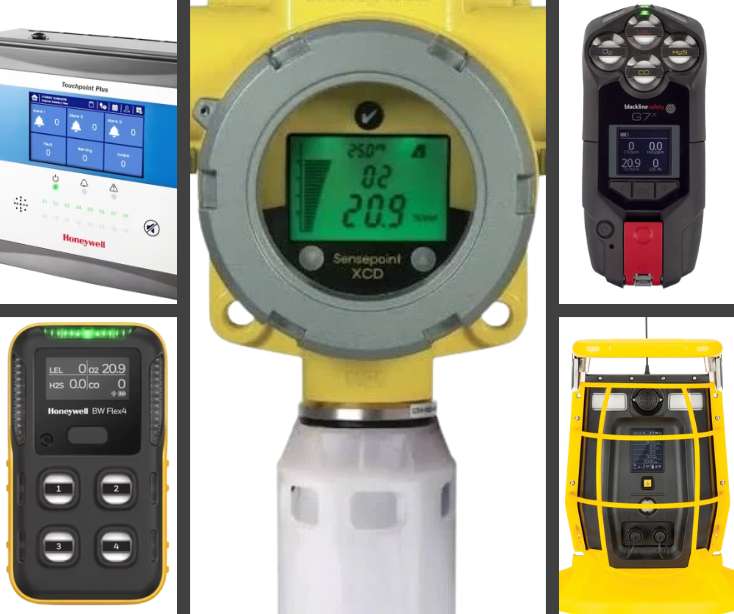
A portable gas detector is a worker-carried instrument, single-gas or multi-gas, designed to monitor the air the user is moving through. Single-gas units are typically deployed against a single known hazard, such as oxygen, carbon monoxide, or hydrogen sulphide. Multi-gas units monitor four or five gases at once and remain the standard tool for confined-space entry, hot-work permits, and leak surveys. The Honeywell BW range carried by Aegis includes the BW Ultra (five-gas plus volatile organic compounds for confined-space entry), the BW Flex 4 (four-gas standard) and the BW Solo (single-gas, configured at order). The Blackline G7 sits alongside as a connected safety unit, adding cellular reporting, fall detection, and live readings to a monitoring dashboard.
Portable detectors work on the same sensor chemistry as fixed heads but face a much harder operating life. They get dropped, dunked, baked in utes and run flat. That makes the calibration regime the load-bearing piece of any portable program. Aegis’s gas detection workshop, an authorised Honeywell Tier 1 Platinum Partner service centre and a Tier 1 Blackline Safety service provider, performs the bump tests, bench calibrations and firmware updates that keep a fleet of portables compliant.
Use cases that almost always need a portable: confined-space entry under the Code of Practice for Confined Spaces, hot-work and welding permits, leak surveys on gas plant, refrigerant top-ups and pre-entry sweeps before a fixed system is back online after maintenance.
4. When to Choose Which (or Both)
The decision criteria are clearer than the marketing usually suggests. Start with hazard permanence. If the hazard is structural, sitting in a defined room, present whether or not anyone is in the space, the answer is fixed monitoring. If the hazard is transient, present only when work is being done, or moving with the worker, the answer is portable. Most sites have both kinds of hazard, and end up with both kinds of monitoring.
The second factor is worker mobility. A maintenance team that moves between zones cannot be protected by fixed heads alone, because they will spend half their day outside any given sensor’s coverage envelope. The third factor is area monitoring for temporary works. When a shutdown, turnaround or major construction event drops a crew into a space that does not yet have permanent infrastructure, transportable area monitors fill the gap. The Honeywell RigRat and the Blackline EXO sit in this bridging category: rugged, battery-powered, multi-gas units that drop on a tripod or skid and watch a perimeter for the duration of the works.
Compliance drivers add a fourth factor. The transition to the new Workplace Exposure Limits on 1 December 2026 lowers thresholds for several common industrial gases. Any business with an existing fixed gas detection program should review alarm setpoints and sensor selections against the new limits before the transition date. Portable fleets need the same review, plus a software update on units that hold their thresholds in firmware.
|
Criterion |
Portable |
Fixed |
Area Monitor |
|
Use Case |
Entry, hot work, leak survey |
Continuous Plant + Boundary |
Temporary works, shutdowns |
|
Calibration |
6 monthly, bump test + bench cal |
OEM determined cycles |
Per portable cadences |
|
South Australia |
VSafeWork SA |
Harmonised |
Industrial manslaughter offence active |
|
Power |
Battery (rechargeable + alkaline) |
Mains + battery backup |
Battery (extended run) |
| Aegis examples | Honeywell BW Ultra/Flex/Solo, Blackline G8 | Honeywell Fixed Sensors, SenTech Refrigerant Monitors | Honeywell RigRat, Blackline Safety EXO |
The table is a starting point, not a substitute for a site survey. Two plants in the same business park can end up with completely different specifications based on the gases involved, the room geometry, and the way the work is sequenced.
5. The Aegis Service Wrap
On the gas detection side specifically, the workshop holds Honeywell Tier 1 Platinum Partner status, which means factory-level service authorisation for the Honeywell BW range and the broader Honeywell industrial automation product set. The Tier 1 Blackline Safety service appointment covers the G7, EXO and the wider connected-safety range. Equipment hire is available for short-term shutdowns, turnarounds and project work, with docking stations and bump-test stations included. Custom fabrication for site-specific mounting, housing and integration is handled in the same workshop. Local Queensland turnaround runs out of Geebung for the south-east and Chinchilla for the Surat Basin and western corridor.
Conclusion: A Compliance Posture, Not Just a Product
Portable and fixed gas detectors do their best work when they are designed against a single hazard profile, not specified in isolation. The right answer for a refrigerant plant room is rarely the right answer for a confined-space entry crew, and a sensible business writes both into the same monitoring plan. Calibration discipline is what turns either type of equipment from a piece of hardware into a defensible compliance posture.
To talk through a site, a hire fleet, or a calibration schedule, call Geebung on 07 3865 1139, drop into the showroom, or browse the full portable gas detection and fixed gas detection range.