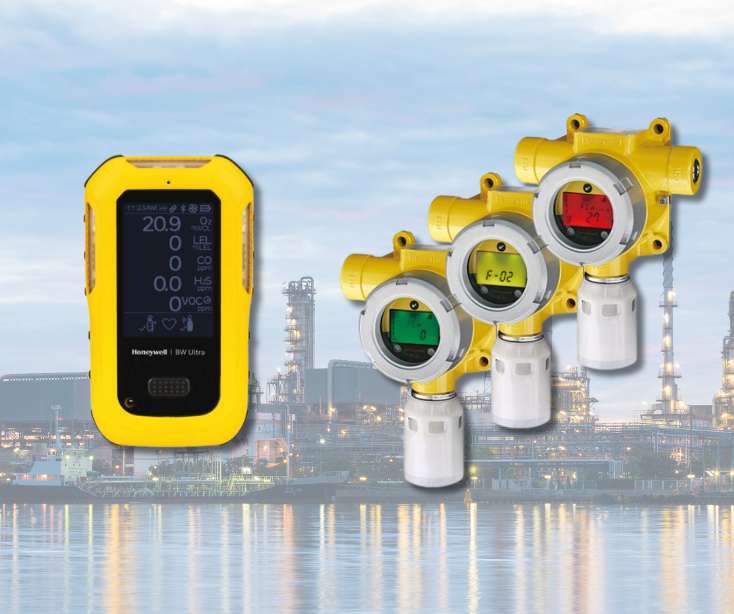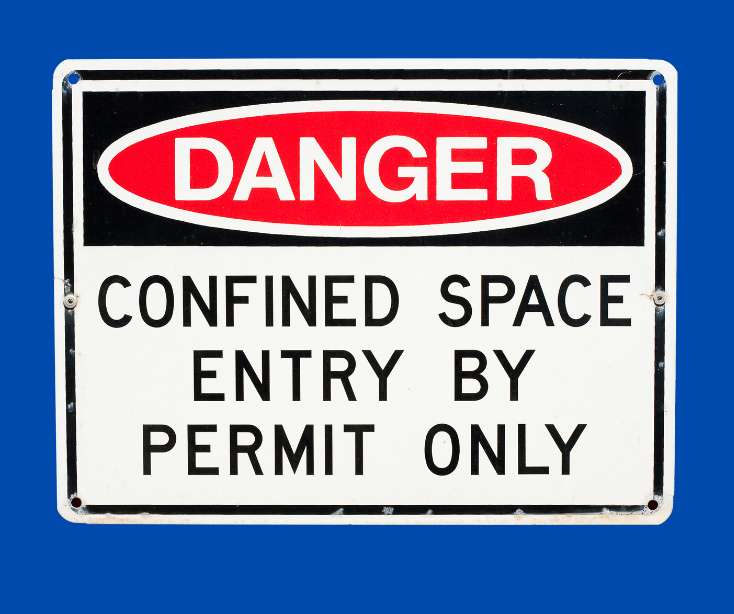

Gas Leak Detectors (Home vs. Industrial)
Two Australians walk into a hardware store looking for a gas leak detector.
One is a homeowner in suburban Brisbane who just had a new gas cooktop installed and wants some peace of mind.
The other is a safety manager from a processing facility in Gladstone, who's got a December 2026 compliance deadline bearing down and a fleet of fixed detectors whose alarm setpoints may no longer meet the incoming Workplace Exposure Limits.
They are both in the right place. They should not buy the same thing.
And the consequences of getting that choice wrong are very different for each of them…inconvenient for one, but potentially catastrophic for the other.
Residential Gas Safety: Protecting Your Home and Family
The gas risks in an Australian home are specific, and understanding them changes how a detector gets chosen and where it gets installed.
Most metropolitan Australian homes run on natural gas that is delivered through reticulated pipelines to cooktops, ovens, water heaters, and space heaters.
Methane is lighter than air. When it leaks, it rises. It accumulates near the ceiling and in roof spaces before it builds to dangerous concentrations at nose height.
A detector that’s designed to catch a methane leak needs to be mounted high: ideally within 30 centimetres of the ceiling and near the appliances most likely to leak, but not directly above a cooktop where cooking vapours will trigger constant false alarms and train the occupants to ignore it.
LPG (liquefied petroleum gas, or the cylinders outside the rural property or the caravan) behaves in the opposite direction entirely. It's heavier than air. It sinks. It pools at floor level in garages, under caravans, beside outdoor barbecue setups, and in any enclosed low space near a cylinder or LPG appliance.
A detector for LPG needs to be mounted low, as in within 30 centimetres of the floor. A ceiling-mounted detector in an LPG environment is detecting the wrong layer of air and will register nothing useful until the situation is well past manageable.
This placement question isn't trivia. It's actually the single most common reason residential gas detectors fail to do their job.
H2 COCO CO: The One Most Australian Homes Are Missing
Carbon monoxide is produced by incomplete combustion. Gas heaters that haven't been serviced. Wood fires in poorly ventilated rooms. Water heaters with blocked flues. Barbecues brought inside during a cold snap. It has no colour, no smell, and no taste, and it kills at concentrations that arrive with very little warning.
The early symptoms (i.e. headache, nausea, mild disorientation) are very easy to attribute to tiredness or illness. By the time the occupants understand something is wrong, they may not be in a condition to act on it.
A carbon monoxide detector is not the same thing as a natural gas or LPG detector. They detect different hazards. A home with any gas appliance, any solid fuel heater, or an attached garage where a car is occasionally left running needs both.
Combination units that monitor combustible gas and carbon monoxide simultaneously are widely available at Australian hardware retailers. They represent a sensible approach for most households and cost somewhere between $60 and $150 on average.

Industrial Gas Detection: Compliance, Liability, and the 2026 WEL Shift
The moment the conversation moves from a family home to a workplace, everything changes. A residential gas detector is a sensible safety measure. An industrial gas detector in a workplace that requires one is a legal obligation under the Work Health and Safety framework operating across every Australian jurisdiction, and it’s administered by WorkSafe Victoria, SafeWork NSW, WorkSafe WA, Resources Safety and Health Queensland, and their counterparts across the country.
The technical standards that govern industrial gas detection are AS/NZS 60079.29.1 for detection systems in explosive atmospheres, and AS/NZS 4641 for toxic gas detection. These standards define performance requirements, installation criteria, and maintenance obligations. They are the documents a regulator will reference in a post-incident investigation when determining whether the detection system was fit for purpose.
The compliance landscape is shifting significantly from 1 December 2026, when Australia transitions from Workplace Exposure Standards (WES) to the new Workplace Exposure Limits (WEL) framework.
For several toxic gases, the new WEL values are lower than the current WES thresholds. Industrial detectors that are currently programmed to alarm at WES-based setpoints will be out of compliance from that date. And not in a technical and theoretical sense, but actually out of compliance in a way that will create direct regulatory liability for the PCBU (if a worker is exposed above the new legal limit and the detection system didn't alarm because it was still calibrated to the old one).
Key Differences: Consumer vs. Industrial Grade
The specification gap between a $50 hardware store detector and an industrial unit that’s deployed in a WA mining environment is not a matter of brand premium. It reflects genuinely different performance requirements.
Sensitivity is the foundational difference. Residential detectors operate in the parts per million (ppm) range. This is appropriate for identifying a gas leak that has reached a concentration posing a flammability or health risk in a domestic setting.
Industrial detectors monitoring toxic gases like H2SH_2S H2S in resources sector applications need to operate in the parts per billion (ppb) range. The occupational exposure limits for H2SH_2S H2S under the incoming WEL framework sit at concentrations that a residential detector would never register.
Using a consumer-grade device in an industrial application where ppb sensitivity is required isn't a cost-saving measure. It’s a detection system that isn't detecting!
Durability reflects the reality of Australian industrial environments. The Pilbara in summer, a coastal processing facility cycling between humidity extremes, and an underground mine with constant particulate exposure are all environments that can destroy consumer electronics.
Industrial detectors carry IP (Ingress Protection) ratings that indicate resistance to dust ingress and water immersion. IP67 means the device can be submerged to one metre without damage. IECEx or ATEX certification indicates that the device is designed to not become an ignition source in an explosive atmosphere (which is a property entirely irrelevant for a kitchen detector and absolutely non-negotiable in a gas processing environment).
Connectivity distinguishes a standalone alarm from an integrated safety system. Residential detectors sound an alert audible to people nearby. Industrial fixed detection systems integrate with Supervisory Control and Data Acquisition (SCADA) networks, building management systems, and fire and gas panels that can automatically initiate ventilation responses, trigger process shutdowns, alert remote monitoring centres, and generate timestamped records of every alarm event.
H2 Sensor Technologies Explained
Three sensor technologies cover the vast majority of gas detection applications in both residential and industrial contexts.
Catalytic bead sensors (pellistors) are the standard technology for combustible gas detection. They oxidise flammable gas on a heated catalytic surface and measure the resulting change in electrical resistance.
They're robust, cost-effective, and they’re also appropriate for detecting CH4, LPG, and most hydrocarbons. Their limitation is oxygen dependence (in an oxygen-depleted atmosphere, they under-read) and vulnerability to poisoning by silicone compounds, lead, and halogenated hydrocarbons that coat the catalytic surface and permanently reduce sensitivity.
Electrochemical sensors handle toxic gas detection and monitoring. A chemical reaction at the sensor surface generates an electrical current proportional to gas concentration. They deliver the sensitivity that’s required for toxic gas monitoring at the ppb ranges that industrial applications demand, but they also have a finite service life (which typically runs about two to three years), and after which accuracy degrades regardless of how diligently they're calibrated.
Infrared (IR) sensors use the principle that specific gases absorb infrared light at characteristic wavelengths. They're highly selective, immune to poisoning, and don't require oxygen to function. They're also more expensive, which is precisely why they appear predominantly in fixed industrial installations where their reliability characteristics justify the cost. For a quick overview of what these products look like and how they perform visit here.
Maintenance: The Set and Forget Trap
Both residential and industrial gas detectors share one property that users consistently underestimate: they degrade silently.
A detector that appears to be working (that powers on, passes its self-test, and that shows normal readings) may have sensors that have drifted far enough from accuracy to miss an actual hazard.
For residential detectors, the maintenance requirement is modest. Press the test button monthly to confirm the alarm circuit is functional. Replace batteries annually or when the low-battery warning sounds. Replace the device within its rated service life (which is typically five to ten years) and regardless of whether it appears functional, simply because sensor chemistry degrades on a timeline that self-tests don't reveal.
For industrial detectors, AS/NZS 60079.29.2 governs the maintenance framework. Bump testing (as in exposing the instrument to test gas and confirming sensor response) should be conducted daily before use.
And calibration (the process of verifying reading accuracy against a certified reference gas of known concentration) should occur at a minimum every six months.
Making the Right Investment for the Environment
For the Brisbane homeowner, the path is clear and accessible. A combination detector, correctly placed, tested monthly, and replaced within its service life, is going to provide meaningful protection against the realistic gas risks in a residential setting.
It also costs less than a dinner out and requires no technical expertise to install!
For the Gladstone LNG Plant safety manager, however, the calculus is different. Compliant industrial detection (with its properly specified instruments, regular calibration to AS/NZS 60079.29.2, alarm setpoints reviewed and reprogrammed for WEL compliance before December 2026, integration with site safety systems, and the documented audit trail) represents a very real investment.
This is because it sits against the cost of a serious incident: the human cost, the WorkSafe investigation, the potential prosecution under WHS legislation, and the operational disruption of a facility shut down while regulators determine why the detection system didn't perform as required.
The right detector for the environment isn't overcaution.
It's the whole point of having one. That’s where the expertise and range of Aegis Sales & Service comes into play. Reach out to one of our experts today to get the right product for your workplace.