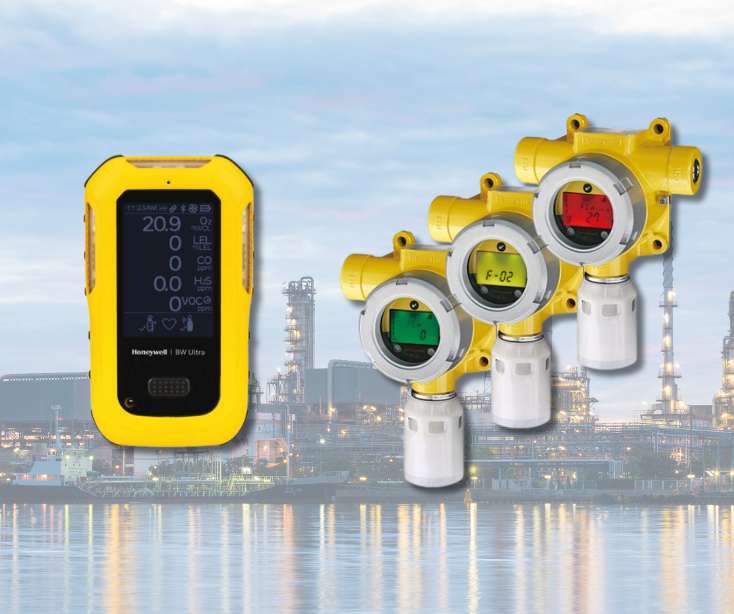

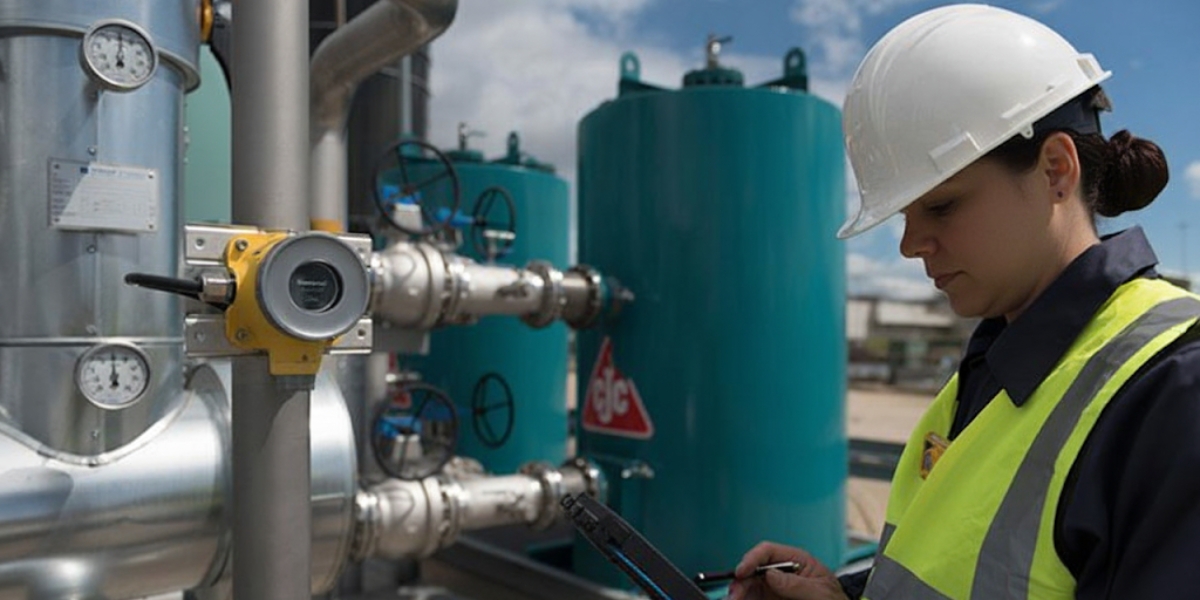
Gas detection plays a crucial role in protecting workers, equipment, and facilities. Also, it's essential for meeting occupational health and safety obligations.
Installing detectors correctly is more than a precaution. It's a fundamental requirement for legal and regulatory adherence.
When you think about toxic gases, a chemical plant or other industrial facility might spring to mind. But we use gases in a wide range of settings, including HVAC systems in residential buildings.
Installing and maintaining fixed gas detection systems is serious business for health and safety. Let's examine the key factors for successful fixed gas detection installations.
Installing Gas Detectors for Safety Compliance
To ensure dependable performance, each detector must be positioned and configured in accordance with relevant safety codes and industry standards. Poorly placed devices or non-compliant installations can leave dangerous gaps in coverage, increasing the risk of undetected leaks or system failures.
Incorporating gas detection planning early (ideally during the facility’s design or refurbishment stage) helps avoid costly retrofits and workflow interruptions later.
By mapping out detector locations at the outset, you not only optimise coverage but also reduce installation expenses and improve long-term operational safety.
Ultimately, proper installation provides peace of mind: workers stay protected, businesses remain compliant, and operations continue without costly disruptions or liabilities.
Core Considerations for Successful Gas Detection
Having a network of properly installed and well-maintained gas detection units in place throughout the building is the first step in preparing for a potential gas leak. The following guidelines will help you better position your gas monitoring system for quick and efficient detection in the event of a gas leak.
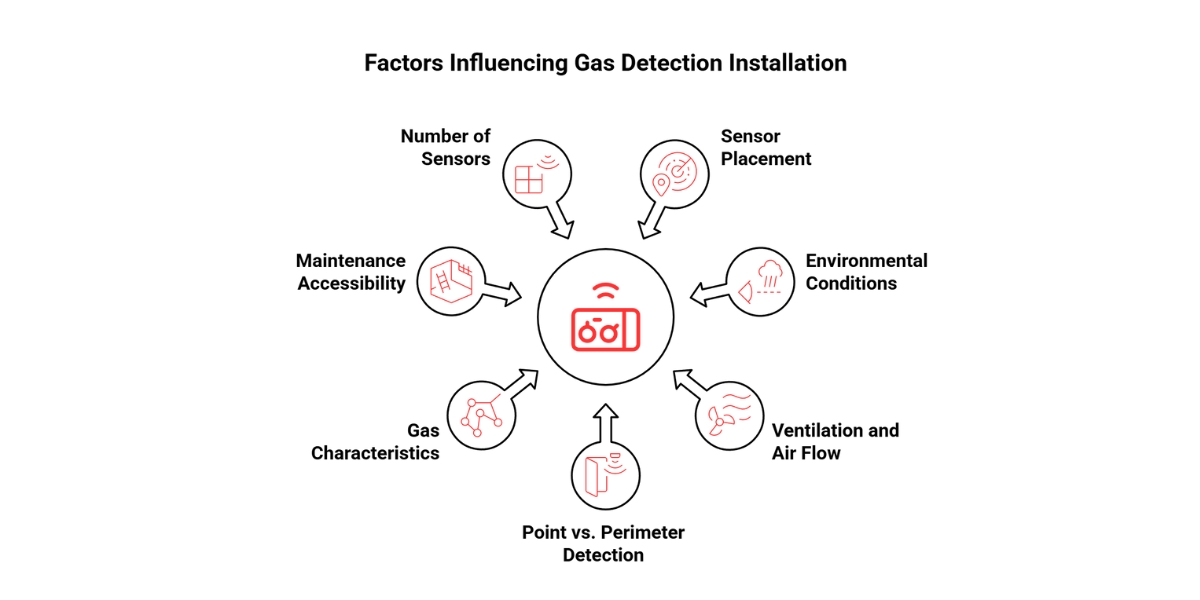
1. Choosing the Correct Number of Sensors
Determining how many detectors to install begins with understanding the unique layout of your facility, the potential hazards within it, and where leaks are most likely to originate.
Having too few sensors can leave blind spots. Strategic coverage across all risk areas ensures that gas leaks are detected quickly and comprehensively.
We recommend erring on the side of caution for maximum coverage. This way, you won't get caught short.
2. Selecting the Right Locations for Gas Detectors
Placement matters as much as quantity. Sensors should be positioned close to potential leak points (such as valves, joints, or process equipment) as well as in areas where gases might gather. When deciding on locations, take into account:
- Whether the gas is lighter or heavier than air (which affects how it disperses)
- Existing airflow and ventilation currents
- Any nearby ignition sources that could present additional risk
- Ease of access for inspections and routine maintenance
3. Environmental Conditions
Temperature swings, humidity, and airborne particulates can all influence a detector’s accuracy and lifespan. Selecting detectors designed to withstand these specific conditions ensures they will perform reliably over time.
The instrument’s Ingress Protection (IP) rating is a vital consideration. To protect its sensitive electronics, the rating must be sufficient.
Potential damage during daily use of the space is another consideration to keep in mind. Avoid installing sensors where the potential for damage is high. Damage may impact the instrument’s ability to detect the target gas effectively.
4. Ventilation and Air Flow
The way air moves through a space, whether by natural currents or mechanical systems, can carry gases away from leak points or concentrate them in unexpected areas. Sensor placement should follow airflow patterns to avoid false readings or missed detections.
For instance, avoid placing sensors "upwind" from any operating equipment. Installing sensors between the equipment and the exhaust fan is best practice.
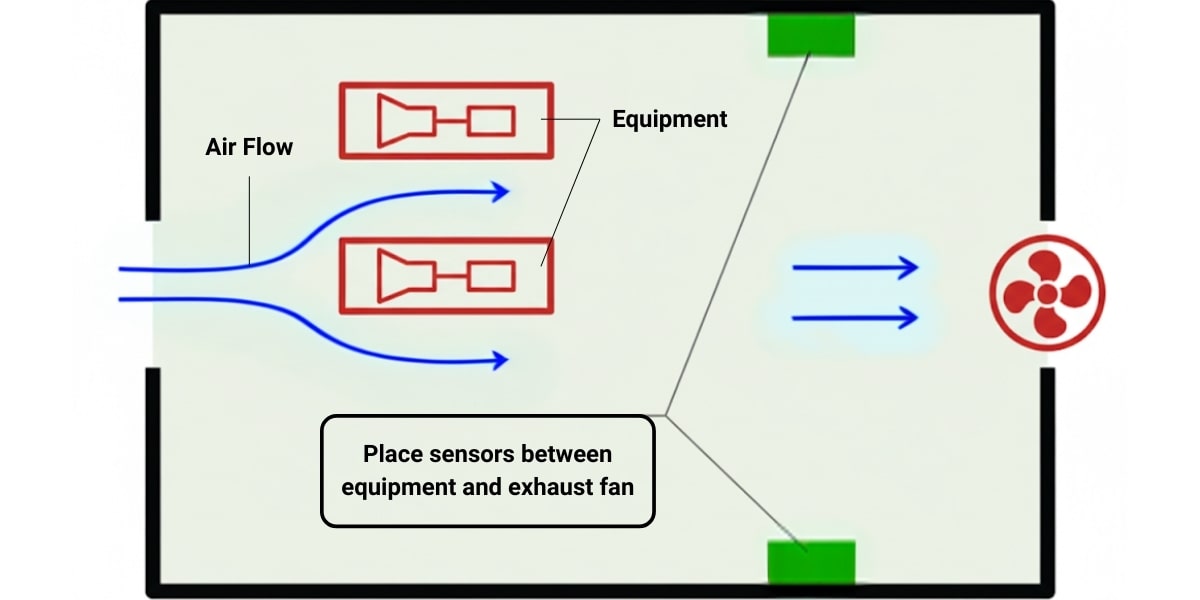
Areas with high airflow can cause dilution of the target gases. In these cases, you can improve leak detection by placing sensors closer to a potential leak source.
Avoid placing a refrigerant gas detector in an area where airflow may become obstructed. Cold storage is an example of this.
Workers may stack boxes over the sensor, blocking it. Obstructing the airflow to the sensor can cause ineffective leak detection.
5. Point Detection vs. Perimeter Detection
Depending on the area, you might choose point detection over perimeter detection, or vice versa.
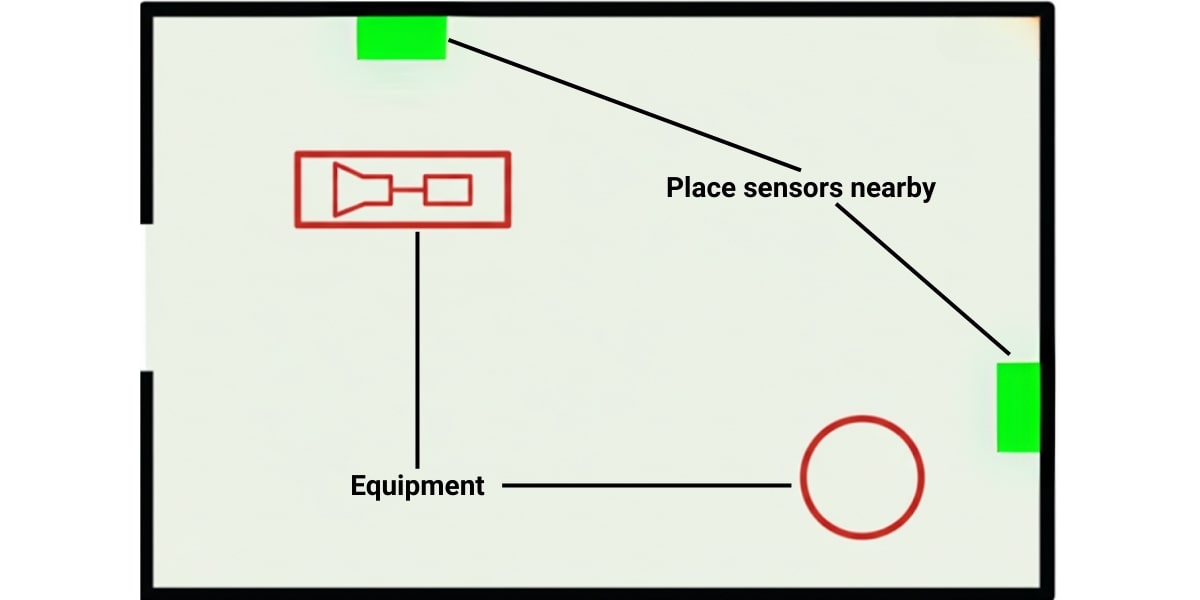
Point Detection
Point detection involves installing sensors directly at likely leak sources for immediate, precise readings. This method is particularly effective for specific equipment, pipework, or machinery where leaks are most likely to occur.
Perimeter Detection
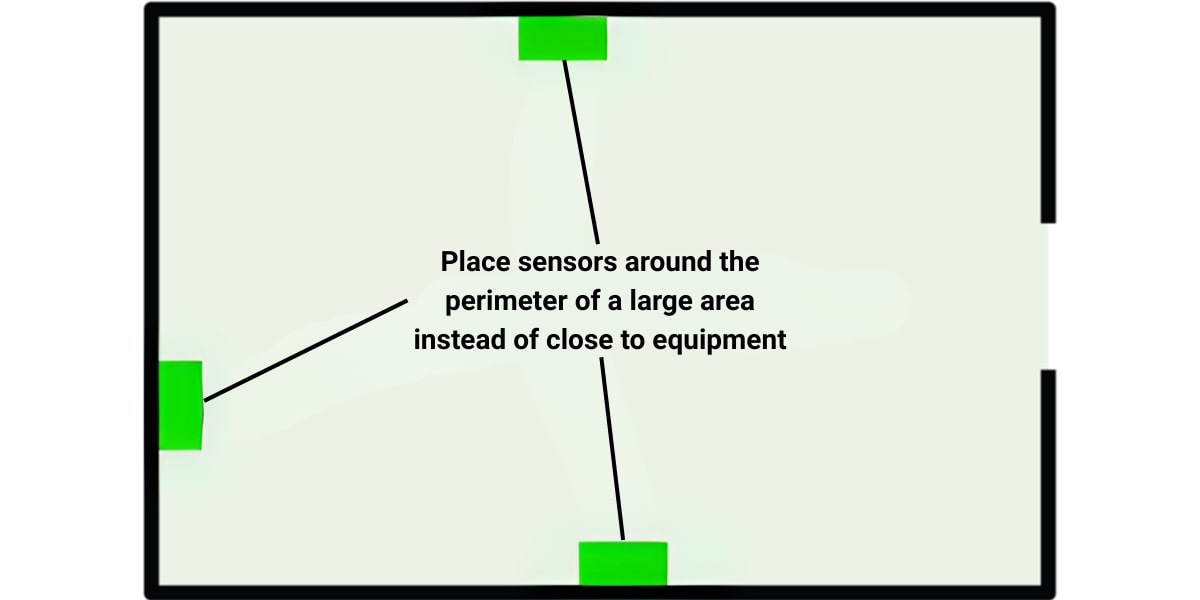
Perimeter detection establishes a ring of sensors around the outer edges of a monitored zone. This approach helps track gas migration over larger areas, providing an early warning system if gas begins to accumulate or move beyond a specific boundary.
Installing sensors near the point of a potential leak can be difficult in some cases. Perimeter detection may be a better option in these instances.
The target gases becoming diluted before reaching the sensor is something to consider, though.
6. Target Gas Characteristics
The physical characteristics of the target gases are another critical consideration. For fixed gas detection, factor in the heaviness or lightness of gases in relation to air, known as specific gravity.
Place sensors close to ground level when targeting gases heavier than air. Heavier gases include:
- LPG
- Ozone
- Butane
- Propane
For gases lighter than air, place sensors closer to the ceiling. Lighter gases include:
- Methane
- Ammonia
- Hydrogen
Other gases have a density similar to air. For these gases, place sensors in the middle zone, around 1.5-2 metres from the ground. Similar density gases include:
- Nitrogen
- Carbon Monoxide
7. Maintenance Accessibility
Ensuring your gas detectors function optimally is crucial for the safety in your facility. Regular maintenance is vital to functionality.
Consider accessibility when installing gas detectors. The installation area should be easily accessible for functional testing and maintenance (where possible).
Of course, easy access isn't always practical. In such cases, remote sensors are a safety lifeline.
You can still monitor for gas leaks while ensuring access to other system parts for maintenance.
Conclusion
A well-planned gas detection system is a frontline defence against serious accidents. Identifying leaks early helps prevent injuries or fatalities and shields valuable equipment from costly damage.
Keeping these systems effective over time requires more than just initial installation. Routine inspections, functional testing, and scheduled maintenance are vital to ensure every detector operates as intended.
Skipping these steps can leave gaps in protection and increase the risk of undetected hazards.
Thorough planning during the design phase and precise installation practices are equally important. When detectors are correctly specified and strategically positioned, they not only protect personnel but also help businesses meet regulatory obligations and maintain a safe, compliant workplace.
Do you need fixed gas detection equipment or services? The experts at Aegis Sales & Service are here to help.
Get in touch with our team online today.