
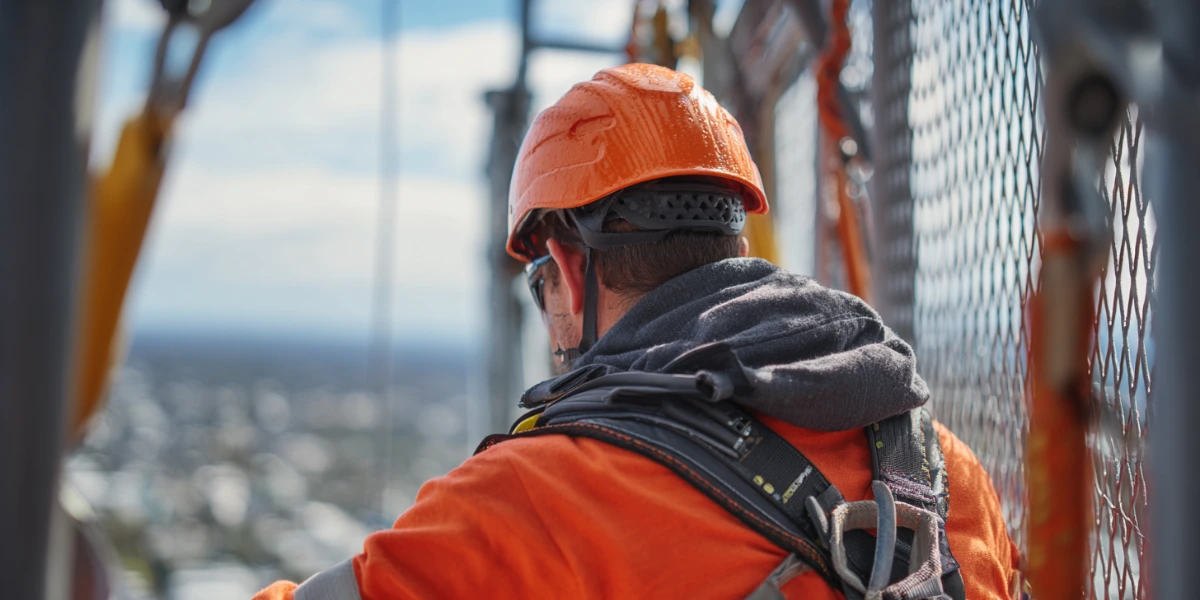
Every year in Australia, falls from heights are a tragic cause of serious injuries and fatalities in the workplace. Safe Work Australia data consistently shows falls as one of the leading causes of serious injury claims.
Falls from height are more than a statistic. It represents a profound human cost and a significant operational risk that demands attention.
The importance of robust fall protection cannot be overstated.
For workers, it's about returning home safely at the end of each shift, free from life-altering injuries. For businesses and their owners, fall protection isn't merely a compliance checkbox - it's a fundamental aspect of your duty of care.
This guide will help safeguard your most valuable asset (your people) and protect your business from severe financial penalties, damaging legal action, and irreparable reputational harm.
Jump to:
Understanding Fall Hazards: Recognising the Risks Before They Become Incidents
Australian Regulations and Standards for Fall Protection
The Hierarchy of Control: Your Blueprint for Managing Fall Risks
Building a Safer Workplace: Implementing Your Fall Protection Plan
Understanding Fall Hazards: Recognising the Risks Before They Become Incidents
Effective height safety begins with a thorough understanding of where and why falls happen. Identifying these potential pitfalls is the first step in robust risk assessment.
Common Scenarios Where Falls Occur
Falls from heights aren't limited to just high-rise construction. They can happen in a variety of everyday workplace situations across Queensland and beyond.

- Working on Roofs: Whether it's installation, maintenance, or cleaning, working on commercial or residential roofs – especially those with fragile materials, skylights, or steep pitches – presents significant fall risks.
- Scaffolding and Elevated Work Platforms (EWPs): While designed to provide safe elevated access, falls can occur from incomplete scaffolding, misuse of EWPs, or improper access/egress.
- Ladders: Often underestimated, ladders are a frequent source of fall injuries due to incorrect setup, overreaching, using damaged equipment, or working from heights that exceed safe limits.
- Openings in Floors or Walls: Unprotected voids, pits, or penetrations in floors (e.g., during construction or maintenance) or open edges in walls pose a constant danger to unaware workers.
- Excavations: Falling into trenches or excavations, particularly those that are deep or poorly shored, can result in serious injury or even entrapment.
Factors That Significantly Increase Fall Risk
Identifying the scenario is just one part of the equation. Several compounding factors can turn a routine task into a high-risk activity.

- Weather Conditions: Strong winds can destabilise workers, equipment, or even scaffolding. Rain or even morning dew can make surfaces incredibly slippery, dramatically increasing the likelihood of a slip and fall.
- Poor Lighting: Dim conditions, shadows, or glare can obscure hazards like uneven surfaces, unguarded edges, or equipment, leading to missteps.
- Unstable or Uneven Surfaces: Loose gravel, debris, wet surfaces, damaged flooring, or unstable ground near excavations can all cause workers to lose their footing unexpectedly.
- Lack of Training and Supervision: Workers who haven't received adequate, accredited training in working at heights, or who aren't properly supervised, are far more likely to make critical errors that lead to falls. This includes incorrect use of PPE or misunderstanding of safe work procedures.
- Inadequate or Damaged Equipment: Using the wrong type of ladder for the job, relying on uninspected or damaged fall arrest equipment, or operating faulty elevated work platforms are direct pathways to a fall. Ensure all working at heights equipment is fit for purpose and regularly maintained.
Systematically identifying these scenarios and understanding the contributing factors helps you develop targeted and effective control measures, moving from reactive responses to proactive prevention.
Australian Regulations and Standards for Fall Protection
For any business operating in Australia, understanding and adhering to the Work Health and Safety (WHS) legislative framework is not just good practice. It's a legal obligation. When it comes to falls from heights, the regulations are clear, and the penalties for non-compliance are significant.
The Foundation: Work Health and Safety (WHS) Act
At the heart of Australia's safety framework is the Work Health and Safety (WHS) Act 2011, which operates in most states and territories, including here in Queensland. This Act establishes the general duties of care for all Persons Conducting a Business or Undertaking (PCBUs).
Your primary duty under the WHS Act is to ensure, so far as is reasonably practicable, the health and safety of workers and others at your workplace.
This broad duty encompasses providing a safe work environment, safe systems of work, and ensuring the provision of adequate information, training, and supervision.
Specific Fall Protection Regulations: Managing the Risks of Falls
Beyond the general duties, specific WHS Regulations apply to managing the risks of falls. These regulations often refer to, or are supported by, codes of practice that provide practical guidance.
The Code of Practice: Managing the Risks of Falls at Workplaces
Developed by Safe Work Australia, this is a nationally recognised guideline that provides detailed information on how to meet your WHS obligations regarding falls.
A key principle embedded in these regulations and the Code of Practice is the duty to manage the risks of falls. This means:
- Identifying all foreseeable hazards that could result in a fall.
- Assessing the risks associated with those hazards (i.e., how likely is a fall and how severe could the injury be?).
- Controlling those risks by implementing the most effective measures reasonably practicable.
- Reviewing and, if necessary, revising control measures to ensure their ongoing effectiveness.
Integral to controlling risks is the application of the Hierarchy of Control. This is a step-by-step process that dictates the order in which control measures must be considered and implemented. We'll delve into this crucial hierarchy below.
Australian Standards (AS/NZS): Guiding Best Practice
While WHS Regulations set the legal requirements, Australian Standards (AS/NZS) provide the technical specifications and best practice guidance for equipment, systems, and procedures related to working at heights. Adhering to these standards demonstrates that you are meeting your duty of care "so far as is reasonably practicable" and are using equipment fit for purpose.
Key standards you should be aware of include:
- AS/NZS 1891: This comprehensive series covers industrial fall-arrest systems and devices, including safety harnesses, lanyards, anchorages, and horizontal and vertical lifelines.
- AS/NZS 1892: This addresses the safe design, construction, and use of portable ladders.
- AS/NZS 1657: This covers fixed platforms, walkways, stairways, and ladders – design, construction, and installation.
Ensuring that any fall protection equipment you purchase, or any system you install, complies with the relevant AS/NZS standards is fundamental to ensuring its effectiveness and your compliance with WHS duties. Regular checks against these standards should be part of your equipment management plan.
The Hierarchy of Control: Your Blueprint for Managing Fall Risks
When it comes to managing the risks of falls from heights, the Hierarchy of Control is the gold standard. This tiered approach mandates that you always aim for the highest level of control reasonably practicable, progressively moving down the hierarchy only when higher-level controls are not feasible.

1. Elimination
The most effective control measure is always to eliminate the risk entirely. This means removing the need for work at heights altogether.
Example: Can you prefabricate components at ground level before lifting them into place? Can a window be cleaned from the inside rather than requiring external access? If the work can be done safely on the ground, a fall hazard is eliminated.
2. Substitution
If elimination isn't reasonably practicable, the next step is to substitute the hazard with a safer alternative that reduces the risk.
For instance, instead of workers manually handling materials at height, can you use machinery like a telehandler with an attachment to place items, thus reducing the time workers spend exposed to a fall risk?
3. Engineering Controls
When you can't eliminate or substitute the need to work at heights, engineering controls are your next line of defence. These are physical modifications to the workplace or equipment that prevent a fall or minimise its impact, typically without requiring active participation from the worker. They are often referred to as 'passive' systems.
- Guardrails and Barriers: Erecting sturdy, properly designed guardrails around elevated work areas, floor openings, or edges is highly effective in preventing workers from reaching a fall point.
- Safety Mesh: Installing safety mesh underneath roofing or floor structures can prevent workers from falling through fragile materials or openings.
- Scaffolding: Properly erected and regularly inspected scaffolding provides a stable, temporary work platform with integrated edge protection, eliminating the risk of falling from an unprotected edge.
- Elevated Work Platforms (EWPs): Using EWPs (like scissor lifts or boom lifts) designed with guardrails and stable platforms can significantly reduce fall risks compared to ladders or fragile structures, provided they are operated correctly and maintained.
4. Administrative Controls
If, after considering higher-level controls, a residual risk of a fall remains, you should implement administrative controls. These are policies, procedures, and training that help manage the risk by defining how work should be done safely.
- Safe Work Method Statements (SWMS): Mandatory for high-risk construction work (including work involving a risk of a fall of 2 metres or more), SWMS clearly outline the work to be done, the hazards, the risks, and the control measures to be implemented.
- Permits to Work: For specific high-risk tasks, a formal permit system ensures all necessary safety checks are completed and authorised before work commences.
- Exclusion Zones: Delineating and enforcing exclusion zones below work at heights prevents people from entering areas where they could be struck by falling objects or where a fall from above could occur.
- Training and Supervision: Comprehensive, accredited training for all workers involved in working at heights is crucial. This must be complemented by vigilant supervision to ensure procedures are followed and equipment is used correctly.
5. Personal Protective Equipment (PPE)
PPE is the lowest level of control in the hierarchy, a last resort. It requires active participation from the worker and relies heavily on correct use, maintenance, and inspection.
- Fall Arrest Systems: Designed to safely stop a worker's fall after it has occurred. This includes a full-body harness, a shock-absorbing lanyard, and a secure anchor point. A rescue plan is always essential when using a fall arrest system.
- Fall Restraint Systems: These systems prevent a worker from reaching a position where a fall could occur. They typically consist of a harness, lanyard, and anchor point, rigged to physically restrict movement.
- Safety Nets: Installed below work areas, safety nets catch workers who fall, preventing them from hitting the ground or lower levels.
- Helmets: While not directly preventing a fall, safety helmets protect workers from head injuries, particularly from falling objects, which is a significant secondary risk associated with working at heights.
Systematically working through the Hierarchy of Control ensures the highest level of safety for workers in Queensland and across Australia.
Building a Safer Workplace: Implementing Your Fall Protection Plan
Having the right equipment and understanding the regulations is crucial, but implementing a robust fall protection plan truly drives safety outcomes.
1. The Foundation: Thorough Risk Assessment
Every effective fall protection plan begins with a meticulous risk assessment. This isn't a one-off task but an ongoing process that adapts to changing work environments and tasks.
Identifying Hazards
This involves systematically reviewing all work at heights activities to pinpoint potential fall hazards. Look beyond the obvious. Consider roof edges, skylights, floor penetrations, fragile surfaces, excavations, ladder work, and even proximity to overhead structures. Engage workers in this process – their on-the-ground experience is invaluable.
Assessing Risks
Once identified, evaluate the likelihood of a fall occurring and the potential severity of the injury. Consider factors like height, surface conditions, weather, worker experience, and the frequency of exposure. This assessment informs which control measures are most appropriate and reasonably practicable according to the Hierarchy of Control. Documenting these findings is essential.
2. Training and Competency: Empowering Your Workforce
Even the best equipment is useless without competent operators. Training and competency are non-negotiable for anyone working at heights.
Importance of Accredited Training
Ensure all workers who may be exposed to fall hazards, or who use fall protection equipment, receive nationally recognised, accredited training in working safely at heights. This training should cover hazard identification, risk assessment, equipment use and maintenance, inspection, and emergency procedures.
Refresher Courses
Competency isn't a static state. Skills fade, regulations change, and new equipment emerges. Regular refresher courses are vital to keep workers' knowledge current and ensure their skills remain sharp.
Best practice suggests refresher training every two to three years, or more frequently if incidents occur or new procedures are introduced.
3. Equipment Inspection and Maintenance: The Lifeline's Integrity
Your fall protection equipment is your workers' lifeline. A rigorous inspection and maintenance regime is paramount to ensure it remains fit for purpose.
Pre-Use Checks
Every worker must be trained and responsible for conducting a thorough visual inspection of their personal fall protection equipment before each use. They must know what to look for – cuts, fraying, chemical damage, heat damage, deformed components, or any signs of wear and tear.
Regular Inspections
Beyond pre-use checks, all fall protection equipment, including harnesses, lanyards, anchor points, static lines, and rescue gear, must undergo regular, documented inspections by a competent person. These are typically scheduled every 3, 6, or 12 months, or as specified by the manufacturer.
Record Keeping
Maintain meticulous records of all equipment, including purchase dates, serial numbers, inspection dates, inspection findings (pass/fail), and any maintenance or repair work performed. This documentation is crucial for demonstrating compliance and managing the equipment lifecycle.
4. Emergency Procedures: Planning for the Unthinkable
A fall protection plan is incomplete without robust emergency processes. If a fall does occur, a rapid and effective response is critical to minimise injury and prevent suspension trauma.
Rescue Plan
A site-specific rescue plan must be developed and readily available before work at heights commences. This plan should detail how a fallen worker will be retrieved safely and promptly (ideally within minutes).
It must identify rescue equipment, designated rescuers, communication protocols, and procedures for accessing the fallen worker without endangering rescuers.
First Aid
Ensure that designated first aiders are available and trained specifically in the management of injuries related to falls from heights, including how to recognise and manage suspension trauma. Easy access to first aid equipment is also critical.
Conclusion
Falls from heights are not just an unfortunate statistic. They represent a significant, preventable risk with devastating human and financial consequences for Australian businesses.
Understanding the common scenarios and the factors that exacerbate falls, meticulously applying the Hierarchy of Control, and managing your essential equipment helps you take a proactive approach to fall protection.
For safety managers and business owners, your diligence in identifying hazards, ensuring proper training, and maintaining equipment is invaluable. It directly impacts the safety of your team, the continuity of your operations, and your standing within the community and your industry.
We strongly encourage you to take this opportunity to review your current fall protection practices. Are your risk assessments up to date? Is your equipment regularly inspected and compliant with AS/NZS standards?
If you have any doubts or are looking to enhance your safety protocols, the experts at Aegis Sales & Service can help.