
The number of individuals engaged in lone working across various sectors is steadily increasing. From field service technicians and healthcare professionals to security personnel and construction workers, a significant portion of the global workforce now operates independently. This introduces a unique set of safety challenges that demand proactive and innovative solutions.
Connected technology solutions are not merely beneficial but absolutely essential for cultivating a safer and more secure environment for lone workers. Ultimately, they mitigate risks and enhance overall well-being.
Jump to:
Common Hazards for Lone Workers
Connected Technology Solutions for Lone Worker Safety
Implementing Technology Solutions Effectively
Benefits of Connected Technology for Employers and Employees
Lone Working Overview
Lone working is a work arrangement where an individual performs their duties in isolation, without the immediate presence or direct supervision of colleagues or managers. This isolation can manifest in various environments and scenarios, extending beyond the conventional image of a remote field worker.
Lone working encompasses a broad spectrum of situations, including but not limited to:
- Remote Sites: This often involves individuals working in geographically isolated locations, such as construction sites, agricultural areas, research outposts, or utility substations, where immediate assistance from others is not readily available.
- In People's Homes: Caregivers, home healthcare professionals, social workers, and even delivery personnel frequently work in the homes of clients or customers, often without another company representative present.
- Outside of Normal Office Hours: Even within a traditional office setting, an employee working late, early, or over weekends when the building is largely deserted can be considered a lone worker. This also applies to security personnel, cleaners, or IT staff working off-peak hours.
- Isolated Tasks within a Larger Workplace: Even in a bustling workplace, an individual performing a specific task in a secluded area (like a storeroom or a less-frequented part of a factory) can temporarily become a lone worker.
The defining characteristic of lone working is the lack of immediate proximity to others who could provide assistance or oversight in case of an emergency or unexpected event.
Common Hazards for Lone Workers
Lone workers are exposed to a unique set of risks that can be significantly amplified by their isolation.
Physical Injuries
Without immediate assistance, minor incidents can escalate into serious problems. Examples include:
- Falls: A slip, trip, or fall, which might be easily remedied with help from a colleague, could lead to prolonged incapacitation if a lone worker is unable to get up or call for help.
- Accidents with Machinery or Equipment: Operating machinery or tools alone increases the risk of serious injury if an unexpected malfunction occurs or if proper safety procedures are not followed.
- Environmental Hazards: Exposure to extreme weather conditions, hazardous substances, or dangerous terrain without immediate support can lead to serious health consequences.
- Manual Handling Injuries: Lifting heavy objects or performing repetitive tasks without assistance can lead to musculoskeletal injuries.
Sudden Health Problems
A medical emergency that would typically be managed with prompt intervention can become life-threatening for a lone worker. Examples include:
- Heart Attack or Stroke: A sudden onset of a serious medical condition requires immediate attention; delay can be fatal.
- Diabetic Emergencies or Seizures: Individuals with pre-existing conditions may experience acute episodes that require fast action.
- Allergic Reactions: Exposure to allergens can trigger severe reactions that require immediate medical intervention.
- Mental Health Crises: While not always sudden, the isolation of lone working can exacerbate existing mental health issues or contribute to feelings of anxiety, stress, or depression, potentially leading to a crisis without readily available support.
Security Threats
Lone workers can be more vulnerable to malicious intent due to their isolation. Examples include:
- Assault or Robbery: Workers dealing with money, valuable goods, or those in public-facing roles are at a higher risk of being targeted.
- Verbal Abuse or Intimidation: While not always physical, harassment can still be a significant threat to a worker's well-being and psychological safety.
- Unexpected Encounters: In remote or unfamiliar locations, lone workers might encounter individuals who pose a threat, either intentionally or unintentionally.
The absence of a witness or immediate responder means that incidents can go unnoticed for extended periods, potentially leading to more severe outcomes. Lone workers have a critical need for robust safety protocols and connected technology solutions.
Connected Technology Solutions for Lone Worker Safety
Advanced technological solutions offer a profound and transformative enhancement to the overall safety of lone workers. These innovative systems transcend traditional safety measures by providing:
- Real-time connectivity
- Immediate access to emergency support
- Proactive risk mitigation tools
Interconnected devices and intelligent platforms let lone workers maintain vital communication links, even when geographical barriers or challenging conditions might otherwise impede them. This technological evolution safeguards individuals, empowers organisations to fulfil their duty of care with greater precision and effectiveness, and fosters a more secure and responsive work environment.
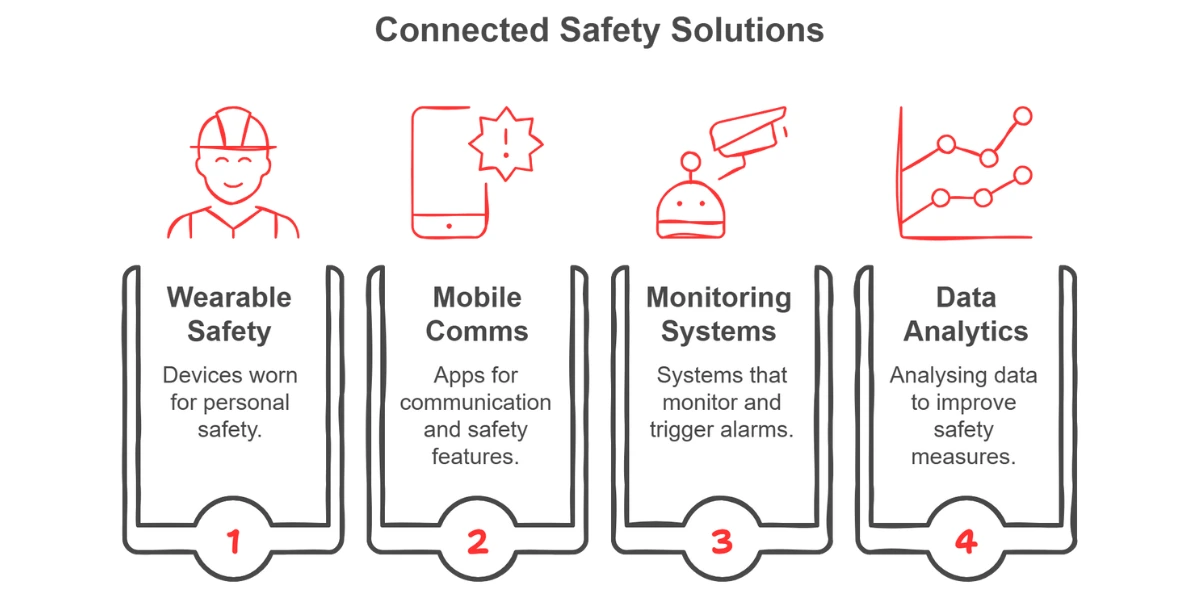
Wearable Safety Devices
Wearable devices are a key tool for lone workers. They keep employees and supervisors connected, ensuring workers get help quickly if needed.
Features:
- GPS location tracking (accurate to within 2 to 5 meters)
- Manual emergency buttons for worker-initiated alerts
- Automatic fall detection and no-motion sensors
- Long battery life (12+ hours per charge)
- Two-way communication capabilities
Examples of Devices on the Market:
- Blackline Safety G7x Gas Detector
- Blackline Safety G7c Gas Detector
- Blackline Safety G6 Gas Detector
Benefits:
- Real-time Location Updates: Wearable devices provide precise and timely location tracking, ensuring supervisors always know where a lone worker is.
- Instant Alerts: In case of an emergency, these devices can send immediate alerts, either manually triggered by the worker or automatically detected (e.g., via fall detection).
- Rapid Response: The combination of accurate location data and instant alerts means that emergency services or response teams can be dispatched and arrive on scene much faster.
- Automatic Incident Detection: Features like fall detection and no-motion sensors can automatically identify potential incidents even if the worker is incapacitated and unable to call for help.
- Direct Communication: Many wearable devices allow for direct communication between the worker and monitoring personnel, facilitating clear understanding and faster resolution of situations.
Mobile Apps and Communication Platforms
Mobile apps also play a significant role in safety. These applications transform smartphones and other mobile devices into powerful safety tools, offering features like GPS tracking, panic buttons, and direct communication channels.
They enable real-time location monitoring for lone workers, allowing supervisors to see their whereabouts and quickly respond in emergencies.
Features:
- Check-in systems: Implement automated systems that require workers to confirm their safety at predetermined intervals or upon entering/leaving designated areas. This can include app-based check-ins, automated calls, or wearable devices that signal safety status.
- Easy messaging: Provide simple, intuitive, and reliable communication tools for workers to quickly and efficiently send messages to colleagues, supervisors, or emergency contacts. This could involve secure messaging apps, dedicated two-way radios, or integrated communication platforms.
- Video calls: Enable real-time visual communication between workers and their teams or support staff. This is particularly useful for remote workers, for troubleshooting issues, for conducting visual inspections, or for providing immediate assistance in situations where visual context is crucial.
Benefits:
- Enhanced Communication: Mobile apps facilitate easy and reliable communication between lone workers, colleagues, and supervisors, fostering a connected environment.
- Real-time Monitoring: Features like GPS tracking and check-in systems allow for continuous monitoring of a lone worker's location and status, improving oversight without being intrusive.
- Rapid Emergency Response: With features like panic buttons and automated alerts for missed check-ins, these platforms enable swift notification of emergencies, leading to faster response times.
Monitoring and Alarm Systems
Dedicated monitoring systems specifically designed for lone workers add another crucial layer of protection. These systems can range from sophisticated GPS trackers with panic buttons to comprehensive solutions integrating two-way communication, fall detection, and scheduled check-ins.
Providing real-time location data and immediate alerts in emergencies enables rapid response, significantly reducing risks associated with working alone. This proactive approach to safety ensures that help is always just a button press away, even in remote or high-risk environments.
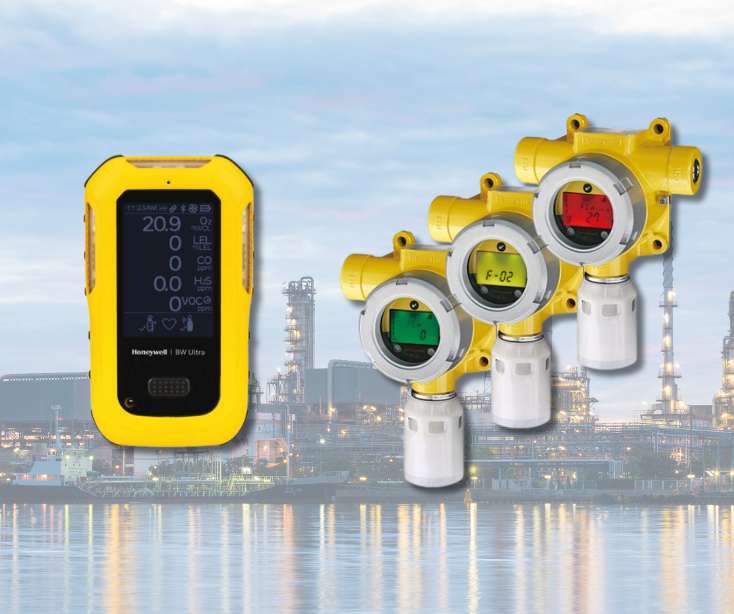
Portable gas detection devices from companies like Blackline Safety are popular monitoring and alarm systems for lone workers. These have powerful sensors that detect gases, including H2S, LEL, CO, O2, CO2, and NH3, and send instant alerts when thresholds are exceeded.
- Integration with Central Monitoring Stations: Often, these systems are linked to a central operations room with 24/7 live monitoring. Trained staff at the station can then respond to alerts.
- Remote Oversight and Alert Response Teams: These systems allow for remote oversight, meaning supervisors can check on workers from a distance. If an alarm goes off, response teams are quickly notified.
Data Analytics and Reporting
The continuous advancements in technology play a pivotal role in the incremental enhancement of safety protocols within the workplace. Integrating innovative solutions and refining existing systems lets organisations proactively address potential hazards and cultivate a more secure environment for their employees.
- Collect and Analyse Safety Data: Modern safety solutions collect data on incidents, near misses, and worker activity. This data is then analysed.
- Identify Trends and Potential Hazards: Analysing data lets companies spot patterns. For instance, they might notice that specific tasks or locations have higher incidents. This helps them find potential hazards.
- Improve Safety Protocols and Training: This information is used to tweak safety procedures and improve training for workers. If data shows falls are common, more fall prevention training can be given.
Implementing Technology Solutions Effectively
Implementing connected technology solutions for lone workers requires careful planning and consideration to ensure their effectiveness and seamless integration into the workplace.
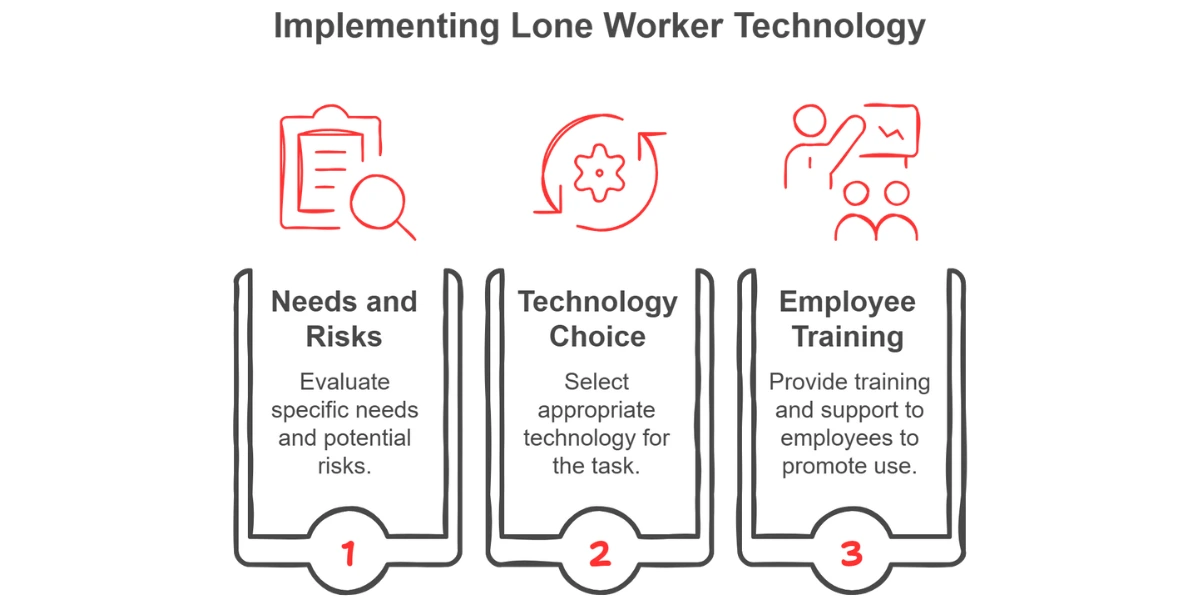
Assessing Specific Needs and Risks of Lone Workers
A thorough assessment of the specific lone working scenarios within your organisation is crucial. This involves:
- Identifying the types of tasks lone workers perform
- The environments they operate in
- The potential risks they face
Understanding these nuances will help in selecting the most appropriate technologies.
Choosing the Right Technology for the Job
Careful consideration must be given to the technical infrastructure required to support these technologies. This includes reliable network connectivity (cellular, Wi-Fi, or satellite) depending on the operational areas.
The chosen solutions must also be compatible with existing IT systems and integrate seamlessly with communication platforms and emergency response protocols.
Training and Supporting Employees in Using the Technology
The human element cannot be overlooked. Employee buy-in and training are crucial for successful implementation.
Lone workers must be educated on how to use the devices and applications effectively, understand the purpose of the technology, and feel comfortable relying on it for their safety. Clear communication about the benefits of the system and how it enhances their well-being will foster acceptance and utilisation.
Ongoing management and maintenance are vital to ensure the continued effectiveness of these solutions. This includes regular testing of devices and systems, software updates, and prompt resolution of any technical issues.
Aegis Sales & Service can help with implementing and testing connected safety devices.
Benefits of Connected Technology for Employers and Employees
Both employers and employees gain from using connected technology for lone working. Create a proactive safety culture where everyone is on board.
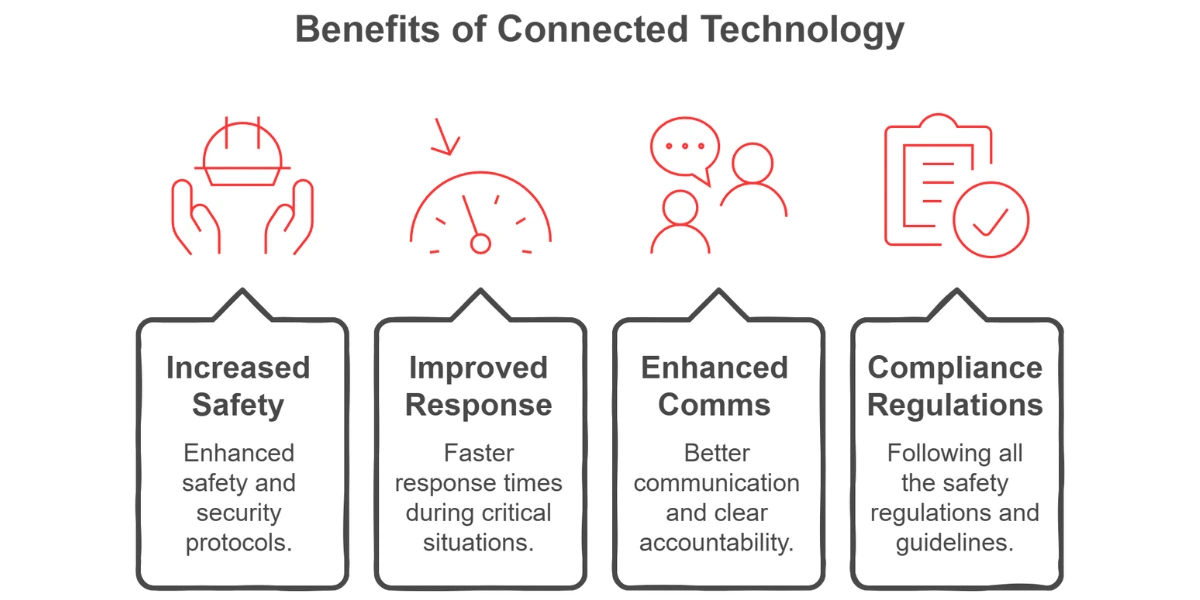
Increased Safety and Security for Lone Workers
The paramount advantage of adopting connected technology solutions for lone workers is the substantial increase in their safety and overall sense of security. These systems provide a robust safety net, offering peace of mind to employers and workers.
Through features such as GPS tracking, no-motion triggers and regular check-ins, companies can monitor their lone workers' well-being in real-time. This proactive approach facilitates immediate identification of potential hazards or incidents, significantly reducing the risk of a lone worker being in distress without timely assistance.
Improved Response Times in Emergencies
In the event of an emergency, every second counts. Connected technology solutions drastically reduce response times when an incident occurs. Whether it's a fall, a medical emergency, or an unexpected threat, these systems can automatically or manually trigger alerts to designated contacts or emergency services.
With precise location data and instant communication capabilities, first responders can pinpoint the lone worker's location and arrive much faster, potentially saving lives or mitigating the severity of injuries. This rapid response capability is a critical component of any effective lone working safety strategy.
Enhanced Communication and Accountability
Connected technology fosters a more cohesive and accountable work environment, even for those operating in isolation. These solutions facilitate seamless communication between lone workers and their supervisors, ensuring they remain supported.
Regular communication features, such as two-way radios or messaging platforms integrated into the safety device, allow for immediate updates, problem-solving, and status checks. The systematic logging of activities and interactions provides a clear audit trail, enhancing accountability for both the lone worker and the organisation in adhering to safety protocols and responsibilities.
Compliance with Safety Regulations
Beyond the immediate benefits to worker well-being, implementing connected technology solutions is crucial for companies to meet their legal obligations regarding worker safety. Many jurisdictions have stringent regulations around lone working, and failing to provide adequate safeguards can result in significant penalties, including fines and reputational damage.
These technologies offer tangible proof of a company's commitment to prioritising employee safety, demonstrating due diligence and adherence to occupational health and safety standards.
Conclusion
Connected technology has become essential for the safety of your lone workers. These solutions offer real-time monitoring and swift emergency responses, providing precise location data and instant alerts.
They also improve communication, reducing isolation and boosting morale. Implementing such technologies will fulfil your company's duty of care to employees.
Need help with safety inspections, choosing connected safety technology, or testing and calibrating equipment?